Private Label vs White Label Sportswear – Which Is Best for Your Clothing Brand?
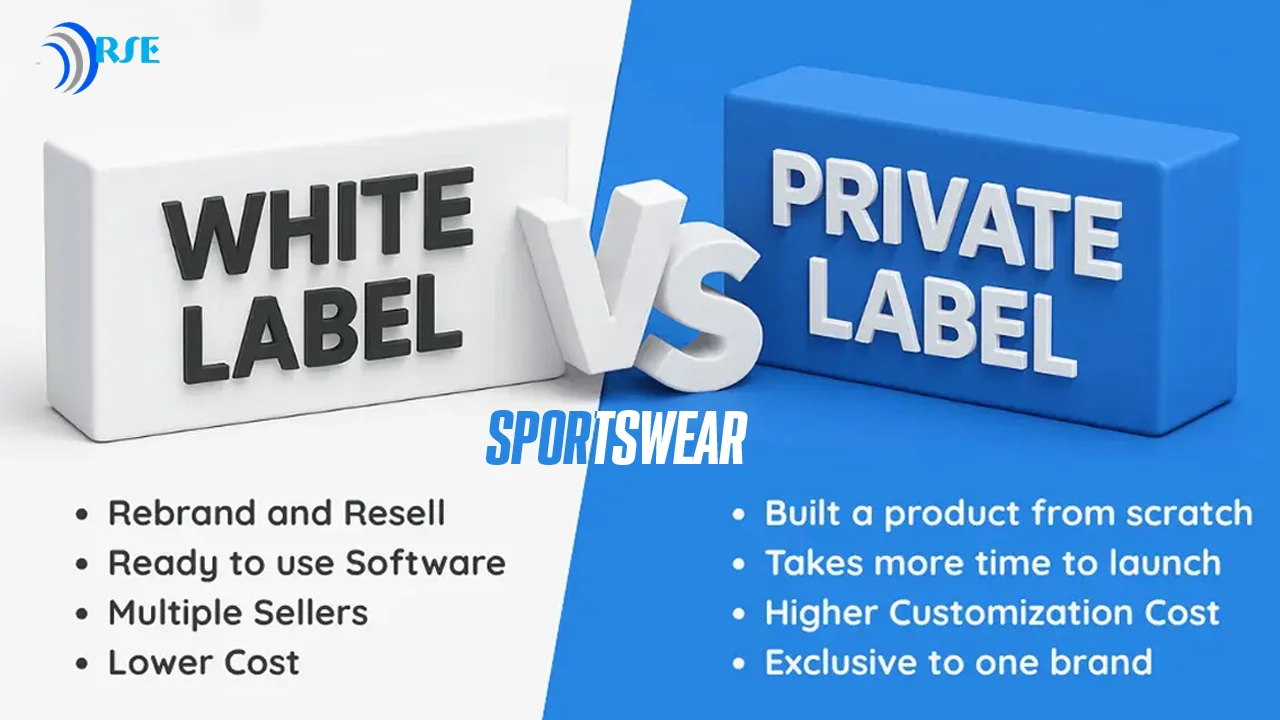
If you’re planning to launch your own sportswear or fitness clothing brand, one of the most significant decisions you’ll face is whether to go private label or white label. Both models can help you enter the market quickly, but they serve different brand goals.
At River Shore Clothing, we’ve guided hundreds of international startups—from boutique gym brands in the UK to athleisure labels in the USA—through this exact decision. Here’s what every new brand should know before choosing between private label and white label sportswear manufacturing.
What Is White Label Sportswear?
White label sportswear refers to pre-made products produced by a manufacturer that multiple brands can buy, rebrand, and sell. These are typically catalog-based collections that already exist in various sizes, colors, and styles.
You simply add your logo or label and start selling. It’s the fastest route to market for new or testing brands.
Advantages of white label sports clothing:
- No need for design or product development.
- Lower minimum order quantities (MOQs).
- Shorter production time (usually 1–2 weeks).
Limitations:
- Minimal customization (fabric, color, or cut often fixed).
- Other companies may sell identical products.
- Harder to establish a strong brand identity or a unique fit.
A white label can be a great starting point for brands validating their niche. Especially those entering e-commerce or dropshipping fitness gear.
What Is Private Label Sportswear?
Private label sportswear means that your products are developed from scratch, based entirely on your brand’s vision, fabric preferences, and style requirements.
At River Shore Clothing, our private label process includes:
- Design and tech-pack development.
- Fabric selection and sample production.
- Custom sizing, stitching, and labeling.
- Complete packaging and branding solutions.
Advantages of private label fitness clothing:
- 100% control over design, materials, and fit.
- Your products are unique to your brand.
- Higher brand value and customer loyalty.
Challenges:
- Requires slightly higher MOQs.
- Takes longer to produce (4–8 weeks).
If you’re serious about building a long-term, recognizable sportswear or athleisure brand, private label manufacturing is the clear choice, especially those entering e-commerce or drop shipping fitness gear.
Private Label Fitness & Athletic Apparel: Why It Builds Stronger Brands
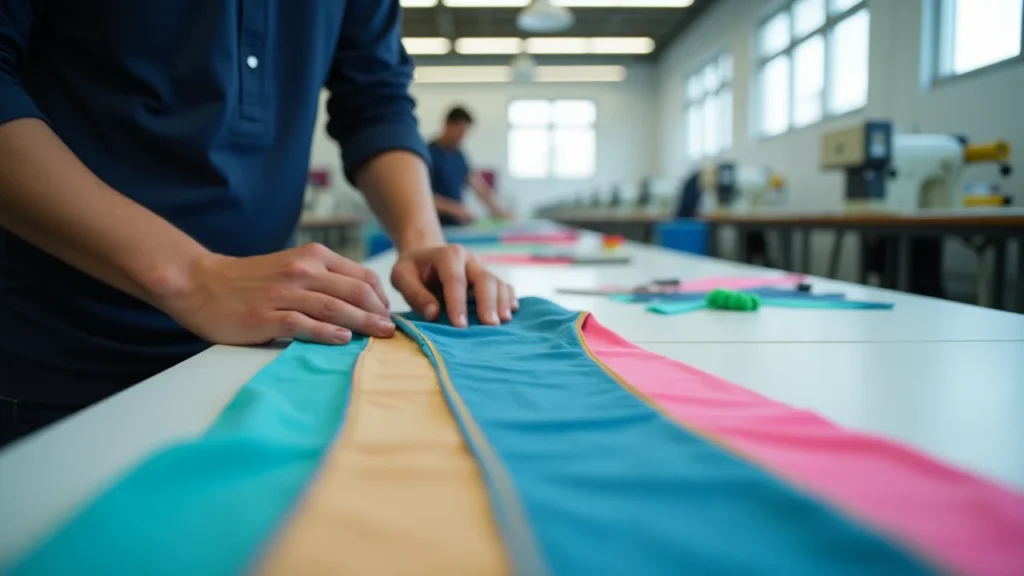
Today’s consumers want originality, comfort, and performance. That’s where private label fitness wear and private label athletic wear stand out.
By working directly with private label fitness apparel manufacturers, you can choose high-performance fabrics such as spandex blends, moisture-wicking polyester, or recycled materials. This flexibility allows you to develop specialized lines for gym wear, yoga, or outdoor training.
Private label sports apparel also helps build stronger brand positioning:
- You can price higher by offering premium, exclusive products.
- You can tell a brand story that connects with your target audience.
- You can control sustainability, design integrity, and quality consistency.
In short, private label athletic apparel allows you to grow from a reseller into a recognized sportswear brand with loyal customers.
Key Differences Between Private Label and White Label
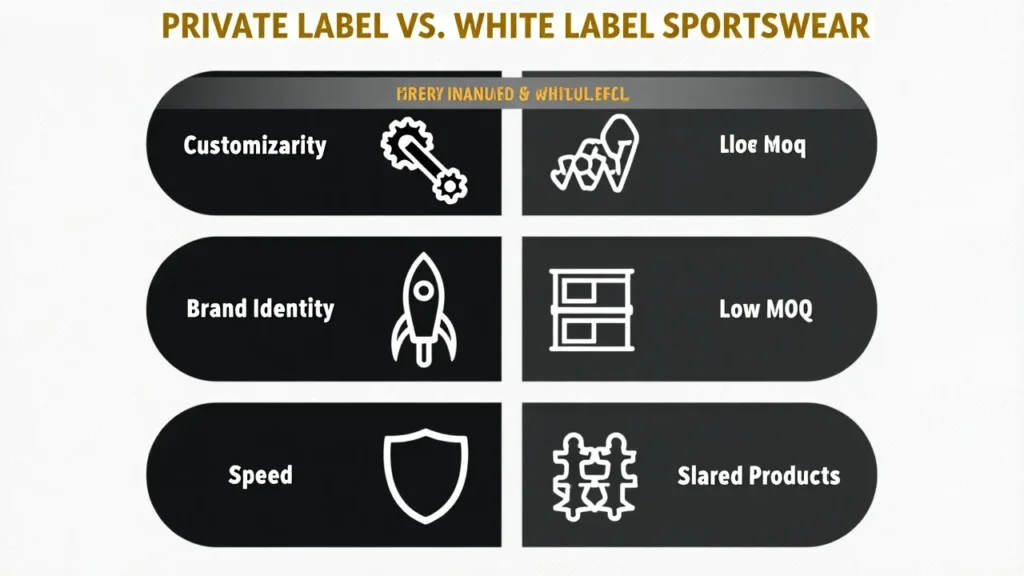
Feature | Private Label Sportswear | White Label Sportswear |
Ownership | Exclusive to your brand | Shared across many sellers |
Customization | Complete control over fabric, fit, and color | Limited to branding or tags |
MOQ (Minimum Order Quantity) | Medium to high (depends on design) | Low (ready stock available) |
Lead Time | 4–8 weeks (custom production) | 1–2 weeks (pre-made) |
Profit Margins | Higher (brand value + exclusivity) | Lower (generic pricing) |
Best For | Established or scaling brands | New startups or product testers |
Which one should you choose for your brand?
The right choice depends on your current stage:
- Choose White Label if you want to enter the market quickly, test designs, or operate with a small budget.
- Choose Private Label if you’re ready to invest in a long-term brand with unique designs, custom fabrics, and better margins.
White label is perfect for quick testing, but private label builds lasting equity. Most successful brands start small and then transition to private label once they know their audience and product demand. Most brands begin with white label and shift to private label once they identify their best-selling activewear product.
Why Choose River Shore Clothing as Your Private Label Sportswear Manufacturer
River Shore Clothing is a Pakistan-based custom sportswear manufacturer serving global markets, including the USA, UK, and Europe. We specialize in private label fitness clothing, athletic wear, and custom activewear manufacturing for new and growing brands.
Why brands trust us:
- Full customization: From fabrics and stitching to packaging and labeling.
- Flexible MOQs: Start small and scale as you grow.
- Ethical & sustainable: Options like organic cotton and recycled polyester.
- Expert team: Dedicated patternmakers, designers, and production specialists.
- Global exports: Fast worldwide shipping and consistent quality assurance.
We’ve helped 200+ growing brands create their private label sportswear, streetwear, and gym wear collections.
Ready to launch your collection?
Contact River Shore Clothing for a consultation and custom quote.
FAQ (Frequently Asked Questions)
Q1: What’s the difference between private label and white label sportswear?
Private label sportswear is made exclusively for one brand, with full design and material customization. White label sportswear is pre-made clothing that multiple brands can rebrand and sell.
Q2: Is private label more expensive than white label?
Usually, yes, but it offers higher profit margins and stronger brand recognition. River Shore Clothing offers flexible MOQs to make private label accessible even for startups.
Q3: How long does private label production take?
On average, 4–8 weeks, depending on your order size, customization, and fabric availability.
Q4: Can I switch from white label to private label later?
Absolutely. Many startups start with white label products, then move to private-label once they identify their best-selling designs.
Q5: Does River Shore Clothing ship internationally?
Yes. We deliver private label sportswear to the USA, UK, Europe, and Australia with reliable logistics and quality assurance.