
The Ultimate Football Strength Workout Program: Build Elite Game-Speed Power

Building a championship roster doesn’t start in the fourth quarter of a playoff game; it begins in the relentless heat of summer. For coaches and program directors, executing a flawless team football conditioning program is the true foundation of gridiron success. We have designed the ultimate blueprint to help you seamlessly implement a comprehensive football strength workout for your entire roster. However, forging an unstoppable team requires more than just science-backed lifts and field logistics. It also means outfitting your athletes in durable football practice gear built to withstand the daily grind. Let’s dive into the plan.
What Is a Football Strength Workout Program?
A football strength workout program is a structured training system designed specifically for the unique physiological demands of the game. Unlike general fitness routines, it focuses on Energy System Specificity—training your body to explode, recover, and repeat.
It focuses on three core pillars:
- Alactic Power: Short bursts (4–7 seconds) of maximum-intensity effort.
- Rate of Force Development (RFD): The ability to reach peak strength instantly.
- Metabolic Recovery: Rapid recovery between plays during the 35-second play clock.
👉 In simple terms: It trains your body to perform like a professional football player—not just look like one.
Key Components of a Football Workout Plan
Strength and Power Training (RFD)
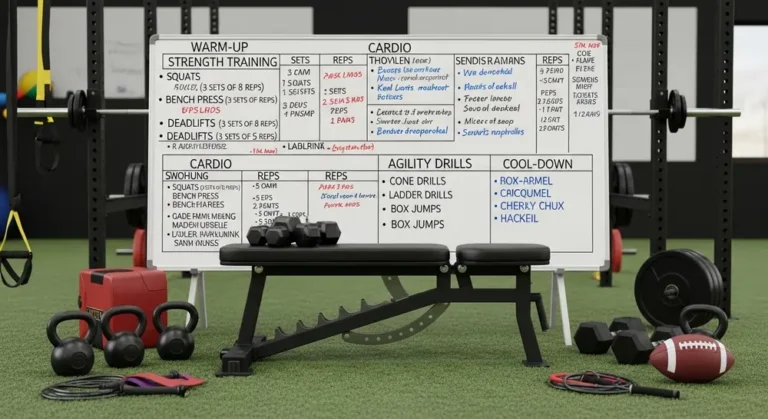
Strength is the foundation of every tackle. However, football requires explosive power. Using Compensatory Acceleration Training (CAT), exercises like squats, deadlifts, and bench press are performed with maximum “upward” speed to prime the Central Nervous System (CNS) for the field.
Speed and Agility Training
Elite football workout routines go beyond linear speed. You must change direction instantly without losing momentum. Drills like Ladder drills, Cone drills, and Shuttle runs improve footwork and “Horizontal Force Production”—the key to elite acceleration.
Conditioning and Endurance
Football involves repeated high-intensity bursts. Proper conditioning workouts for football use a 1:6 Work-to-Rest ratio. This ensures you stay explosive in the 4th quarter and recover faster between plays.
Mobility and Injury Prevention
Mobility is often ignored, but it is critical for “Bulletproofing” the body. We focus on Eccentric Loading (controlled lowering) to strengthen tendons and ligaments, reducing the risk of non-contact ACL injuries.
Complete 5-Day Football Workout Plan (Weekly Split)
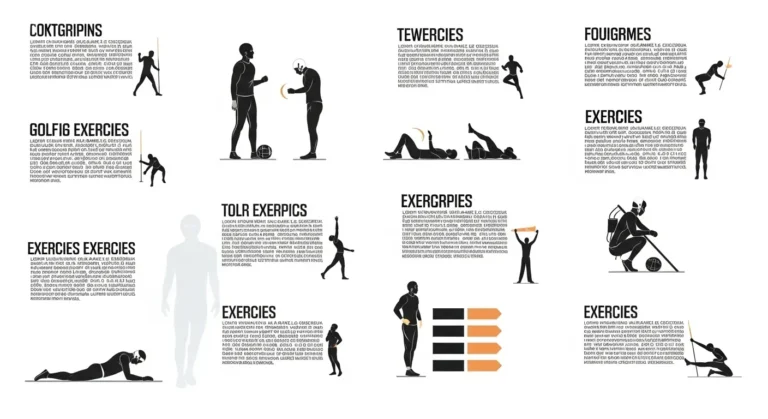
This balanced structure ensures full-body development while allowing for neurological recovery.
Day | Focus | Targeted Keywords/Exercises |
Day 1 | Lower Body Strength | Football strength workout: Squats (4×6), Deadlifts (4×5) |
Day 2 | Speed and Agility | Football player workout: Pro-Shuttle, 40-yard sprints |
Day 3 | Recovery and Core | Active Recovery: Planks, Mobility drills, CNS Reloading |
Day 4 | Upper Body Strength | Bench press (4×6), Shoulder press, Explosive Rows |
Day 5 | Plyometrics & Capacity | Football plyometric workout: Box jumps, Sled pushes |
Position-Specific Football Training Program
Every role on the field has different Biomechanical Demands. Your training must reflect your position:
- Quarterbacks: Focus on football quarterback workouts that prioritize arm speed, core rotational stability, and throwing mechanics.
- Running Backs: Focus on running back workouts emphasizing explosive leg power and “contact balance.”
- Linemen: Heavily weighted strength training and mass movement drills to dominate the line of scrimmage.
- Wide Receivers: Top-end speed, elite agility, and vertical jumping ability to win 50/50 balls.
- Defensive Players: Reaction speed, mobility, and high-impact tackling strength.
Team Football Conditioning Program (For Coaches)

For a successful team football conditioning program, efficiency is key. Use the Rack Groups System:
- Divide and Conquer: Group players by strength level.
- The Rotation: While one group is in the weight room hitting compound lifts, the other is on the field performing football workout drills.
- Total Engagement: Rotate every 20 minutes to ensure maximum intensity and zero idle time.
How to Track Progress: The Fatigue Index
Tracking metrics is the only way to ensure growth.
- Strength Metrics: Monitor your 1RM (One Rep Max) on Bench and Squat.
- Speed Metrics: Use the 40-yard dash and Shuttle run.
- Pro Tip: Track your “Fatigue Index.” If your final sprint is 10% slower than your first, focus more on aerobic recovery.
FAQs About Football Workouts
What is the best workout for football players?
A hybrid of football strength workouts, plyometrics, and alactic conditioning.
Can I do football workouts at home?
Yes. Use football workouts at home like Rear-Foot Elevated Split Squats, plyometric lunges, and sprint intervals in a park to build game-ready speed without a gym.
How many days should I train?
Most athletes follow a 4–6 day schedule, depending on whether it is a football offseason workout or in-season maintenance.
Best Gear for Football Training (Performance Matters)
High-intensity drills demand durable football practice gear. Quality equipment provides comfort and reduces the risk of wear and tear during explosive movements. For teams, investing in custom football uniforms ensures consistency and a professional “game-ready” appearance during training camps.
Conclusion
Success doesn’t come from random sets; it comes from a football workout program backed by science. By combining strength, speed, and technical conditioning, you build a complete athlete ready to dominate. Follow the plan, track your metrics, and lead your team to victory.